Blood Sugar Metabolism Supplement: Chromium Picolinate, Carb Cravings, Dosing and Evidence
Quick Answer: Does Chromium Picolinate Reduce Carb Cravings?
Chromium picolinate is a trace mineral bound to picolinic acid to make it easier for the gut to absorb, and it is the most common mineral in any blood sugar metabolism supplement on the shelf. On cravings the honest answer is that the evidence is limited and inconsistent: a handful of small, short trials — several of them in people with atypical depression or binge eating patterns — reported less hunger or lower food intake, while other studies in general populations found nothing meaningful. Supplement servings usually run 200 to 1,000 micrograms a day, which is many times the 25 to 35 micrograms the American Adequate Intake was set at, and there is no evidence that more chromium helps someone whose diet already supplies enough.
- Typical serving: 200 to 1,000 mcg a day in supplements, against an Adequate Intake of 25 to 35 mcg from food.
- The craving claim: plausible, studied in small groups, and nowhere near settled.
- The catch: topping up a mineral you are not short of is not a mechanism, and most people are not short of chromium.
What chromium actually is, and why picolinate
Chromium exists in two forms that get confused constantly and should never be. Trivalent chromium, written chromium III, is the form present in food and in every dietary supplement. Hexavalent chromium, chromium VI, is an industrial contaminant with a genuinely alarming toxicology profile and no place in a capsule. If you have read something frightening about chromium in drinking water, you were reading about the other one.
Trivalent chromium is poorly absorbed from the diet — typically a low single-digit percentage of what you eat, and often well under that. Picolinic acid is a small molecule that chelates the chromium ion and carries it across the intestinal wall more efficiently than the older chromium chloride form did. That is the entire rationale for the picolinate salt. It is a delivery decision, not a different mineral.
One nuance the marketing never mentions: chromium's status as an essential nutrient is less settled than the word “essential” suggests. American authorities set an Adequate Intake rather than a Recommended Dietary Allowance precisely because the data were not strong enough for the latter, and European authorities have taken an even more cautious position, declining to set a requirement at all on the grounds that no clear deficiency state has been demonstrated in otherwise healthy people. That is an unusual foundation for a supplement category worth what this one is worth.
Where the carb craving claim comes from
The craving story has a traceable origin, and it is worth following because it explains both the appeal and the overreach. The proposed mechanism is that chromium supports the action of insulin, insulin influences the entry of amino acids into the brain, and that in turn influences serotonin signalling and therefore appetite for carbohydrate. Each link in that chain is a real piece of physiology. The chain as a whole is a hypothesis.
The human work that gave it legs was done in specific populations rather than in general dieters: small randomised trials in people with atypical depression, a syndrome that characteristically includes carbohydrate craving and increased appetite, and later small studies in binge eating. Some of those reported reduced appetite or reduced food intake at supplement doses. They were small, they were short, and their participants were selected for having the very symptom being measured.
What has never followed is a large, long, well-controlled trial in ordinary people showing that chromium reliably reduces cravings. Absence of that trial is not proof the effect is absent. It does mean nobody should be selling it as a settled fact, and plenty of pages do.
A different route to the same problem
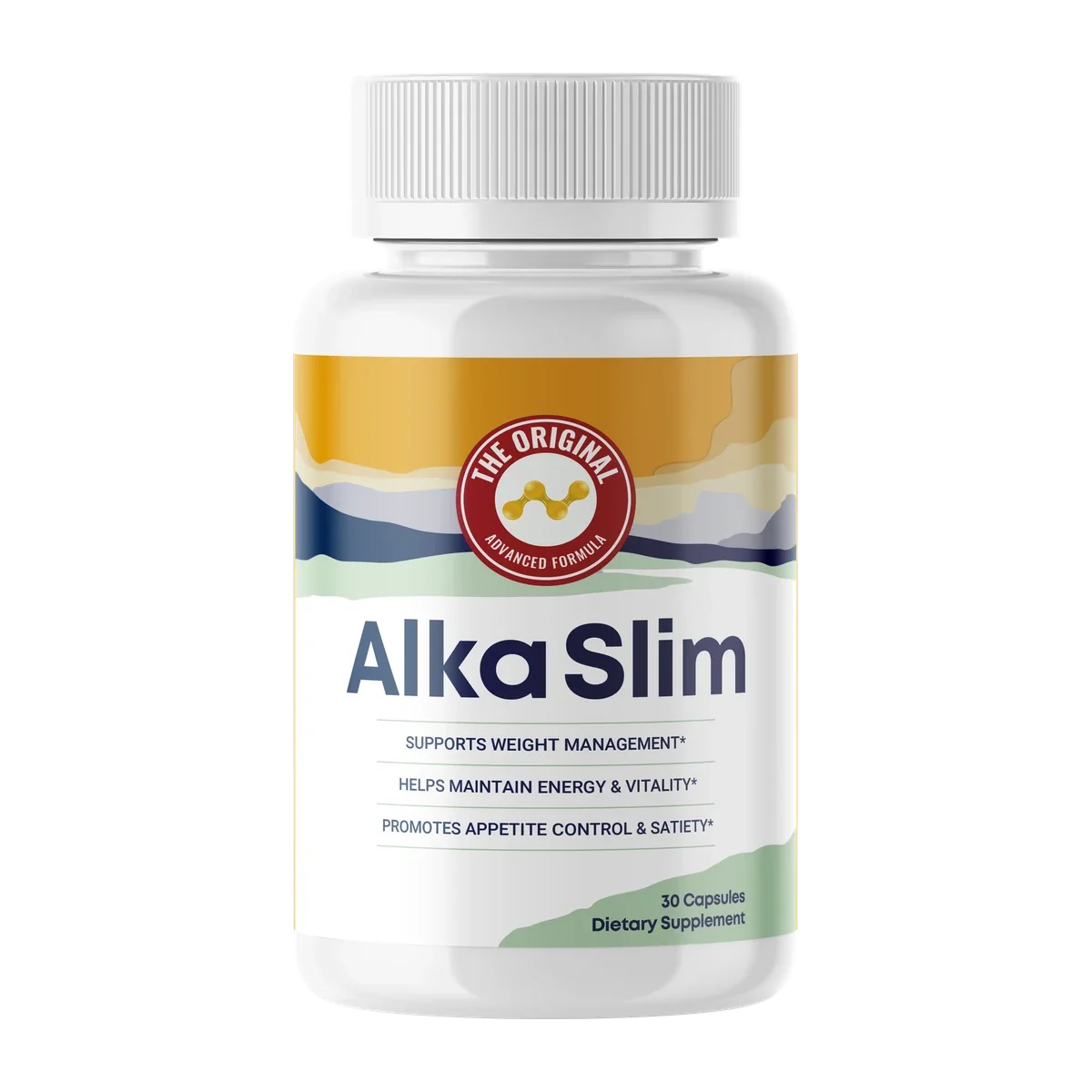
Instead of a mineral, AlkaSlim uses viscous soluble fibre to slow gastric emptying and a plant sugar that blunts sucrose digestion. If you are working out where to buy weight loss pills online without guessing at the formula, the store's own page lists what is in it.
See the Official AlkaSlim StoreWhat the weight and glucose trials found
Chromium picolinate has been tested for body weight more thoroughly than for cravings, and the results are a useful lesson in reading pooled evidence. Meta-analyses of randomised trials have generally found a small average reduction in body weight compared with placebo — small enough that the papers themselves question whether it means anything to an individual, and inconsistent enough that the confidence intervals do a lot of work. The National Institutes of Health summarises the position for weight loss as effects that are minimal and of uncertain clinical relevance, which is about as blunt as a federal fact sheet gets.
On glucose markers the picture divides by population. Trials in people with existing glucose dysregulation have more often reported changes than trials in healthy participants, which is exactly what you would expect from a nutrient: correcting a shortfall does something, adding more to a system that is already replete usually does not. That distinction is missing from almost every sales page, and it is the most useful single idea in this article.
A mineral supplement works best as a correction, not an enhancement. If your intake is adequate, adding ten times the Adequate Intake does not give you ten times the benefit. It gives you expensive urine and a small chance of side effects.
Doses and forms compared
The label variations are more numerous than the meaningful differences. Here is what the common forms are and what has actually been studied at what amount.
| Form | Typical daily amount | Absorption | Strength of human evidence |
|---|---|---|---|
| Food alone (meats, whole grains, broccoli, some fruits) | Adequate Intake 25–35 mcg | Low but sufficient for most people | The basis on which the intake figure was set |
| Chromium picolinate | 200–1,000 mcg | Best absorbed of the common salts | Most-studied supplement form; effects modest and inconsistent |
| Chromium chloride | 200 mcg | Poor | Older trials, largely superseded by picolinate work |
| Chromium nicotinate or polynicotinate | 200–400 mcg | Moderate | Small literature; no clear advantage demonstrated |
| Chromium-enriched yeast | 200–400 mcg | Food-matrix form, moderate | Limited trials, mostly older |
Note the gap between the first row and the rest. A 500 mcg capsule is roughly twenty times the Adequate Intake for an adult woman. That is not a scaled-up version of eating broccoli; it is a different kind of intervention, and it should be judged as one.
Where a blood sugar metabolism supplement fits, and where food already does the job
Chromium is spread thinly through a normal diet: meats, whole grains, broccoli, potatoes, grape juice, some spices. Nutrient composition tables for it are notoriously unreliable, partly because chromium leaches into food from stainless steel processing equipment, which means published food values vary by how the food was handled rather than by what it is. Frank chromium deficiency in people eating ordinary food is rare enough that it is mostly documented in patients on long-term intravenous nutrition without it.
So the honest framing for anyone comparing one blood sugar metabolism supplement against another is this: chromium is cheap, well tolerated at normal supplement amounts, and unlikely to be the ingredient doing the heavy lifting. Its presence on a label is not a red flag. Its presence as the headline reason to buy is. If a product's whole pitch rests on 200 micrograms of a mineral most people already get enough of, the pitch is doing more work than the capsule.
This also answers a question that comes up constantly among people searching for the best chromium supplement for blood sugar: the brand matters far less than whether you needed it in the first place. A well-made 200 mcg picolinate capsule from a tested manufacturer is functionally the same product everywhere.
Safety, upper limits and interactions
At the amounts sold in supplements, trivalent chromium is generally well tolerated, and no Tolerable Upper Intake Level has been set in the United States — not because it is proven safe at any dose, but because there was not enough data to set one. That distinction is worth holding onto. “No upper limit established” is not the same sentence as “no upper limit exists”.
Isolated case reports have described kidney and liver problems in people taking large amounts of chromium picolinate over long periods, and picolinate specifically has raised questions in laboratory cell studies about oxidative DNA damage. Those cell findings have not been shown to translate into harm in people at normal supplement doses, and it would be dishonest to present them as though they had. It would be equally dishonest to leave them out.
The interactions worth knowing are practical. Chromium can add to the glucose-lowering effect of insulin and oral diabetes medication, which is a supervision issue rather than a bonus. It should be taken several hours apart from levothyroxine, because it can reduce absorption of the thyroid hormone. Antacids and some anti-inflammatory drugs change how much chromium the gut takes up in either direction. None of this is dramatic; all of it is worth a sentence to a pharmacist.
What chromium picolinate cannot do
It cannot treat, cure, prevent or reverse diabetes or any other disease, and nothing sold as a dietary supplement in the United States may be marketed as though it can. It is not a substitute for prescribed medication, and it does not license a diet it was never tested alongside.
It cannot block carbohydrate absorption. That is a different mechanism belonging to different ingredients, and chromium is regularly sold as though it shares it. It does not.
It cannot fix a shortfall you do not have. This is the limit that matters most and the one that gets the least airtime. If your diet supplies adequate chromium — and for most people eating ordinary mixed food, it does — then the supplement is topping up a full tank. Expecting an appetite change from that is expecting a nutrient to behave like a drug.
And it cannot be judged in a fortnight. The trials that found anything ran two to four months. Anyone assessing whether a mineral did something over ten days is measuring the weather, not the climate.
How this sits next to a fibre-first formula
Minerals and viscous fibres are answering different questions. A mineral supports enzyme and hormone systems that are already running; it does nothing physical to a meal. A viscous soluble fibre acts mechanically in the stomach and small intestine, gelling, slowing gastric emptying and blunting how quickly carbohydrate arrives downstream. You can feel the second one working within days. The first, if it works at all, works quietly over months.
That mechanical route is the one AlkaSlim's formula commits to, with konjac glucomannan and baobab fibre for viscosity plus L-arabinose to blunt sucrose digestion — and no chromium anywhere on the panel. If the taste side of appetite interests you more than the mineral side, our piece on gymnema sylvestre and sweet taste covers the one ingredient in this category whose effect you can verify on your own tongue in about thirty seconds.
Frequently asked questions
How much chromium do adults actually need each day?
The Adequate Intake set in the United States is 35 micrograms a day for men aged 19 to 50 and 25 micrograms for women in that age band, dropping to 30 and 20 micrograms after age 50. Typical supplement servings are 200 micrograms or more, which is many times the amount the diet was assumed to supply.
Does chromium picolinate stop carbohydrate cravings?
The evidence is limited and mixed. A small number of short trials, several in people with atypical depression or binge eating patterns, reported reduced hunger or food intake, while other studies in general populations found no meaningful change. It is a plausible but unproven effect, not a reliable one.
Is chromium picolinate different from the chromium in industrial pollution?
Yes, and the difference matters. Supplements contain trivalent chromium, the form found in food. Hexavalent chromium is the industrial contaminant associated with toxicity, and it is not used in dietary supplements. The two are chemically and toxicologically distinct.
Can chromium picolinate be taken with other medication?
Check first. Chromium can add to the effect of insulin and other glucose-lowering medicines, and it should be separated by several hours from levothyroxine because it can reduce absorption. Antacids and some anti-inflammatory drugs also change how much chromium the gut takes up.
Scientific references
- NIH Office of Dietary Supplements — Chromium (health professional fact sheet)
- NIH Office of Dietary Supplements — Dietary Supplements for Weight Loss
- The effect of chromium supplementation on cardio-metabolic risk factors in overweight and obese patients. A systematic review and meta-analysis of randomized controlled trial (J Trace Elem Med Biol, 2025)
- Mayo Clinic — Weight loss: 6 strategies for success
- Harvard T.H. Chan School of Public Health, The Nutrition Source — Vitamins and Minerals

See what is on the AlkaSlim label
Four named actives, no published milligram amounts, and a guarantee that starts on the purchase date. Useful reading whether or not this ends up being the best weight loss supplement for women over 40 in your particular case.
Go to the Official AlkaSlim Store