Best Weight Loss Pills 2026: A Buyer's Guide Ranked by Evidence, Not Hype
Quick Answer: What Are the Best Weight Loss Pills in 2026?
There is no single best weight loss pill for everyone. Orlistat, sold as Alli, is the only FDA-approved over-the-counter drug and blocks roughly a quarter of dietary fat. Among supplements, viscous fibres like glucomannan carry the most credible satiety evidence. The best pick matches your eating pattern, shows every dose, and comes with a real guarantee.
- Only FDA-approved OTC drug: orlistat (Alli); every supplement is unapproved by design.
- Best-evidenced supplement mechanism: viscous soluble fibre for fullness, not stimulants.
- Non-negotiables: a transparent full-dose label and a money-back guarantee to test tolerance risk-free.
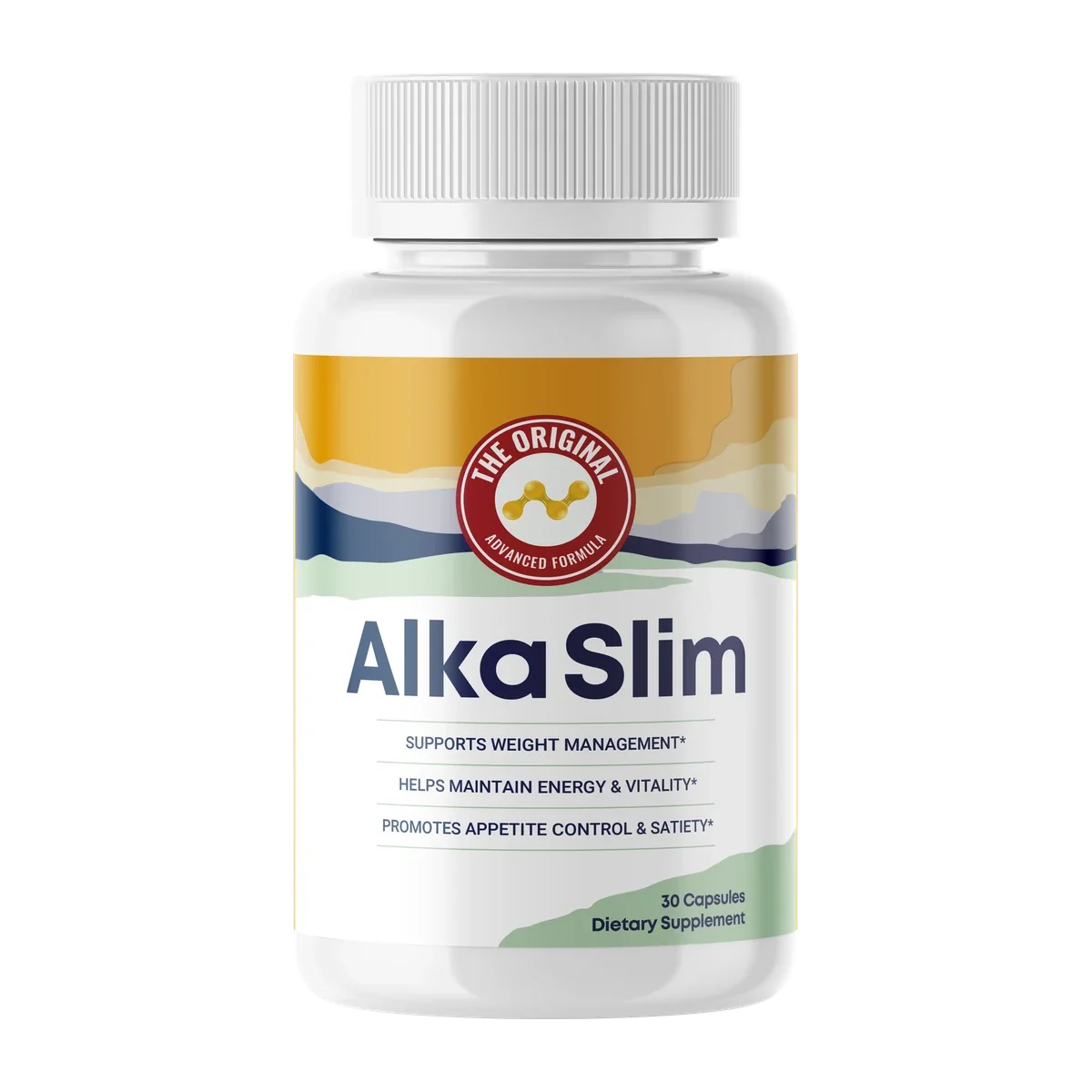
Search “best weight loss pills” and you get a wall of confident rankings that agree on almost nothing. The reason is simple: most lists are ranking affiliate payouts, not evidence. This buyer's guide does the opposite. It sorts the 2026 landscape by what has actually been tested, names the one product with genuine regulatory approval, and shows where a fibre-based option such as AlkaSlim honestly fits — neither miracle nor scam, but a specific tool for a specific job. If you want the best weight loss pills judged on mechanism and transparency rather than marketing, read on.
Start with the one honest dividing line: approved drug versus supplement
Before any ranking makes sense, you need the single distinction the supplement aisle works hard to blur. There is a difference between an approved drug and a dietary supplement, and it is not a technicality.
Orlistat — sold over the counter as Alli and by prescription as Xenical — is a drug. It went through clinical trials for safety and efficacy and carries FDA approval for weight management. It works by inhibiting the enzyme that digests dietary fat, so about a quarter of the fat you eat passes through undigested. That is a real, measurable mechanism, and it comes with a real, memorable side effect profile if you keep eating a high-fat meal, which is rather the point of the deterrent.
Every “natural” weight loss pill, by contrast, is a supplement. Supplements are not approved by the FDA before they go on sale. The manufacturer is responsible for safety and honest labelling, and the agency mostly acts after the fact. This is not a reason to dismiss supplements, but it is a reason to read them differently: nobody has vetted the pill on the shelf the way orlistat was vetted, so the burden of proof sits with the label and the published science, not with an approval stamp that does not exist.
The evidence tiers: how we ranked the 2026 field
Rather than pretend to a numbered leaderboard that would be obsolete by spring, this guide sorts the field into evidence tiers. Where a mechanism sits tells you far more than a star rating a marketer invented.
Tier 1 — Approved drug with clinical trials
Orlistat (Alli). The only over-the-counter weight loss drug the FDA has approved. In trials it produces modestly more weight loss than placebo when paired with a reduced-calorie, lower-fat diet. Its side effects are gastrointestinal and directly tied to how much fat you eat, which makes it self-limiting in an unusual way. If you want the single most evidence-backed pill you can buy without a prescription, this is it — with the caveat that it demands a genuinely low-fat diet to be tolerable.
Tier 2 — Supplements with a recognised satiety mechanism
Viscous soluble fibres: glucomannan, oat beta-glucan, psyllium. These are the supplements with the least hand-waving behind them. Glucomannan (konjac fibre) absorbs water and forms a thick gel in the stomach, slowing gastric emptying and blunting how fast carbohydrate arrives in the bloodstream. The European Food Safety Authority accepted a health claim for glucomannan and weight loss in the context of an energy-restricted diet, at a dose of 3 grams per day split as 1 gram three times daily with water before meals. The effect size is honest and small: trials cluster around one to four pounds more than placebo over roughly five to eight weeks. That is real, and it is not magic. AlkaSlim sits in this tier, built around viscous fibre rather than stimulants.
Tier 3 — Plausible but thin
White kidney bean extract (carb blocker), green tea catechins, glucomannan's lesser cousins. Mechanisms exist on paper — white kidney bean inhibits a starch-digesting enzyme, green tea nudges thermogenesis — but the human trials are smaller, shorter and more mixed. Worth understanding, not worth betting the month on.
Tier 4 — Stimulant thermogenics and mystery blends
Caffeine-stacked “fat burners” and proprietary blends. These sell hardest and prove least. A jittery afternoon is not fat loss, and a “proprietary blend” that hides the milligram amounts is precisely the label design you should walk away from. If a product cannot tell you how much of each active it contains, you cannot judge whether it is dosed to match any study at all.
“Made in an FDA-registered facility” describes the premises, not the product. It is a hygiene bar, not an efficacy claim — useful to know, easy to misread.
Where AlkaSlim honestly fits
AlkaSlim is a Tier 2 product, and we would rather say that plainly than oversell it. Its formula is fibre-led: viscous soluble fibre to create fullness and slow digestion, working with a calorie deficit rather than pretending to abolish one. It will not out-perform a prescription GLP-1 drug, and it does not claim to. What it offers is the best-evidenced supplement mechanism, a mechanism you can actually feel within days as meals sit heavier and hunger softens between them.
The reason it earns a place on a “best weight loss pills” list is not the fibre alone — fibre is a commodity — but the packaging of it: a readable label and a 60-day money-back guarantee that lets you test your own response before committing. That guarantee is doing quiet, important work, because individual response to satiety fibre varies, and the only trial that matters is the one your appetite runs over a few weeks. To see how the mechanism is described by the maker, the clearest source is the AlkaSlim ingredient panel on the official page.
Test the fibre-first approach without the risk
If a viscous-fibre satiety mechanism fits how you actually eat, the honest way to find out is to run it against the 60-day guarantee. The official store lists the formula and the current pricing in one place.
See the Official AlkaSlim StoreHow the categories compare at a glance
| Category | How it works | Regulatory status | Strength of evidence |
|---|---|---|---|
| Orlistat (Alli) | Blocks ~25% of dietary fat digestion | FDA-approved OTC drug | Strong; clinical trials |
| Glucomannan & viscous fibres | Gels in stomach, slows emptying, increases fullness | Supplement; EU-approved claim | Modest but credible |
| White kidney bean extract | Inhibits starch-digesting enzyme (carb blocker) | Supplement | Thin, mixed |
| Green tea / thermogenics | Small nudge to energy expenditure | Supplement | Weak, short trials |
| Proprietary stimulant blends | Undisclosed doses, usually caffeine-led | Supplement | Unjudgeable by design |
Read that table top to bottom and a pattern appears: the further down you go, the louder the marketing and the quieter the evidence. For a deeper side-by-side, our companion piece on how the main OTC weight loss pills compare on mechanism walks through each option's side effects in more detail.
Objection 1: “Aren't natural pills just weak versions of prescriptions?”
Partly true, and worth being honest about. Prescription weight management — especially the GLP-1 receptor agonists that reshaped the field — produces average weight loss that no supplement approaches. If your goal requires that magnitude of change and you qualify medically, a supplement is not a substitute, and any page telling you otherwise is selling.
But “weaker” is not the same as “useless,” and prescriptions carry their own costs: they need a clinician, they can be expensive or hard to get, and they have side effects and stopping-rebound questions of their own. A modest, tolerable, low-cost satiety aid you can start today has a legitimate role for people who are not candidates for, or not ready for, medication. We lay out that trade-off in full in our comparison of how AlkaSlim stacks up against prescription options.
Objection 2: “If supplements aren't FDA-approved, aren't they all a gamble?”
Not approved is not the same as not evaluable. The absence of pre-market approval shifts the work onto you, but the tools are straightforward. Look for a full-dose label with no proprietary blend. Check whether the key active is dosed to match the studies — for glucomannan, that means it can realistically reach the 3-grams-a-day, taken-before-meals-with-water protocol the evidence used. Confirm the product avoids disease claims. And insist on a guarantee, because a company that will not stand behind a refund is telling you how confident it is.
A supplement you can judge is a supplement whose label hides nothing. If the dose is a secret, the product has already failed the only test that matters before you have swallowed a single capsule.
Objection 3: “How do I avoid getting scammed entirely?”
Scam signals are consistent across categories, and once you can see them they are hard to unsee. Fake urgency — countdown timers that reset on refresh. Invented social proof — star ratings and testimonials with no verifiable source. Impossible promises — effortless, rapid, guaranteed loss with “no diet or exercise.” Hidden doses — the proprietary blend again. And no real company: no address, no contactable support, no refund path. Any one of these is a caution; two or more is an exit. A genuine buyer's guide should make you more sceptical, not less, and that includes being sceptical of us — which is why every claim here points at a mechanism or a source rather than a feeling.
The buyer's checklist for 2026
If you strip this guide to a single decision procedure, it is this. Match the mechanism to your eating pattern: fat-heavy diet, orlistat's fat-blocking may fit; grazing and portion creep, a satiety fibre may fit better. Demand a transparent, full-dose label. Reject proprietary blends. Prefer products whose active can reach the studied dose. Weigh cost per day against a real guarantee window, not against the sticker price. And set an honest expectation before you start — a few pounds of assistance to a diet you are already running, not a transformation the capsule performs on your behalf.
By that checklist, the best weight loss pills of 2026 are not the ones shouting loudest. They are the ones that tell you what is inside, dose it to match the evidence, and let you send it back if your body disagrees.
Related reading
Frequently asked questions
What are the best weight loss pills to buy in 2026?
There is no single best pill for everyone. Orlistat, sold over the counter as Alli, is the only FDA-approved non-prescription weight loss drug and blocks about a quarter of dietary fat. Among supplements, viscous fibres such as glucomannan have the most credible satiety evidence. The best choice is the one whose mechanism matches your eating pattern, whose label is transparent and which is backed by a money-back guarantee.
How do I tell a legit weight loss pill from a scam?
A legitimate product names every active ingredient with its milligram amount, avoids disease-cure language, publishes realistic expectations, and offers a genuine refund policy. Warning signs include hidden proprietary blends, promises of effortless or rapid loss, fake countdown timers, invented before-and-after ratings, and no verifiable company address. If the label hides the dose, you cannot judge the product, and that is usually the point.
Are natural weight loss pills as effective as prescriptions?
No. Prescription drugs such as GLP-1 medicines produce far larger average weight loss than any supplement, but they require a prescription, carry more side effects and cost more. Natural options like glucomannan produce modest results, roughly one to four pounds over placebo across a couple of months in trials, and work best as a support for a calorie deficit rather than a replacement for one.
What makes a weight loss pill worth the money?
Value comes from a plausible mechanism, a transparent full-dose label, tolerable side effects, and a guarantee that lets you test your own response without financial risk. A cheap pill that does nothing is expensive, and a costly pill that fits your habits and comes with a real refund window can be worth it. Judge cost per day against the guarantee, not against the sticker price alone.
Scientific references
- NIH Office of Dietary Supplements — Dietary Supplements for Weight Loss
- EFSA — Scientific opinion on glucomannan and weight reduction health claim
- U.S. FDA — Orlistat (Alli and Xenical) information
- NCCIH — Dietary and Herbal Supplements for Weight Loss
- Mayo Clinic — Weight loss: 6 strategies for success
- FTC — Dietary Supplements: An Advertising Guide for Industry

See the label and the guarantee for yourself
A fibre-led formula, a readable panel and a 60-day money-back window. Whether or not AlkaSlim turns out to be the best weight loss pill for you, the official store is where you can check the facts before deciding.
Go to the Official AlkaSlim Store